Learning to "Pray with the Church"

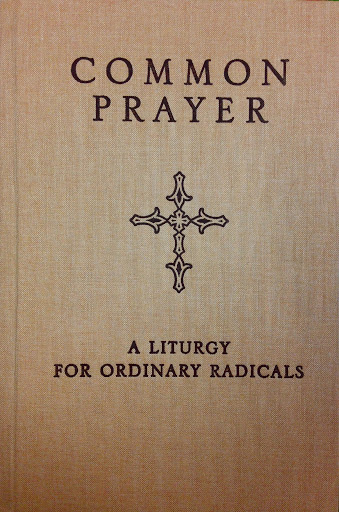
At the beginning of our spiritual formation classes at the university we always offer prayer in some form with which the students are not very familiar. A couple weeks ago I was preparing a brief service of Taizé-style prayer using Common Prayer (by ShaneClaiborne, Jonathan Wilson-Hartgrove, and Enuma Okoro) as the primary resource as I had earlier decided to do. And then I read the reflection for the week:


“On January 22, 1973, the US Supreme Court decided in Roe v. Wade that a mother has the legal right to end her pregnancy up until the point at which the fetus can live outside of her womb. We lament the death of each child lost to abortion. We pray for each parent who has chosen to terminate a pregnancy. And we commit to become a people who welcome life in a culture of death…
“Cyprian of Carthage, a third-century North African bishop, wrote, “The world is going mad in mutual extermination, and murder, considered as a crime when committed individually, becomes a virtue when it is committed by large numbers. It is the multiplication of the frenzy that assures impunity to the assassins.”

Now I don’t think I am prone to unnecessarily shy away from this issue. I have often told people that I think abortion should be illegal except in cases or rape and incest. And I’m still theologically working through even this exception. I don’t have a problem with the reflection offered for this day, except maybe pairing Cyprian’s comments on war with a reflection on abortion without explaining the contrasts.

But our normal mode of operation as an ecumenical campus ministry is to avoid emphasizing where various strands of Christianity would differ on an issue. We fully recognize that there are theological reasons for a variety of positions on this and other issues. Individual members of our staff might speak out on one or another of these positions. But rarely would we address these topics in worship because we hope for the worship that we organize to be a place where all Christians can gather together.

But that is one of the great formative aspects of “praying with the church.” That phrase refers to the practice of praying through a set of prayers and times that are handed down from the tradition. These prayers in many cases have been used for generations or even centuries within the life of the Church. In one sense, the practice of preaching the lectionary, the three year cycle of prescribed readings for worship, is another instance of this. Praying with the church describes a prayer life that is submitted to the Church’s tradition of prayer rather than following only the whim or desire of the individual who prays.

And this tradition will often bring us to those Bible verses or prayers that we would otherwise not read or pray. It brings us to those verses about money and judgment and purity that we would prefer to forget about. And causes us to say prayers of commitment and allegiance to those callings from God as well.

Many of us would much rather read just those parts of the Bible that suit us. We would rather pray in the way that is most encouraging. We want to practice those spiritual disciplines that are most comfortable. But to pray with the church says that maybe there is a more holistic way of being a disciple of Jesus. And if only I will pray along with the great tradition of prayer that is forged over time by a great many disciples under the guidance of the Spirit, then maybe I will become a fully formed disciple yet.

While I really like the prayer book that we were using (Common Prayer), I would really encourage you to find out what prayer guidance is offered from your tradition. Do you have a prayer list that is published by your denomination regularly? Do you have a daily liturgy and lectionary such as the Book of Common Prayer? Are you willing to submit yourself to the great saints of your own church to let them lead you in prayer? Do you trust these saints that much?

If you don’t have something like this in your tradition, then I would recommend the Book of Common Prayer’s Daily Office Lectionary that is available electronically here.

You can also get a hardback copy of the Book of Common Prayer very inexpensively.

I also highly recommend the book mentioned above, Common Prayer (by ShaneClaiborne, Jonathan Wilson-Hartgrove, and Enuma Okoro).

Related Post: Words of Grace for Inadequate Christians

If you like what you have read on this blog, please follow via e-mail or Facebook at the bottom of this post or via RSS feed from my home page.
My Unremarkable Ministry Among College Students

The American Church is pretty anxious about the failure to reach young adults with the Gospel. As I enter my fourth year as University Chaplain at the University of Indianapolis, I have just a few reflections on my rather successful, but unremarkable ministry.

Our United Methodist-related university is very supportive of our work in campus ministry, but our student body is not any more Christian than the state universities in Indiana. I like it that way. I do ministry among regular college students. And God is doing something among those students.

I hope that my reflections, which are quite personal, will be helpful to some pastors out there who are trying to serve these everyday college students well.

I try very hard to not be cool. This isn’t particularly difficult for me. I was born “not cool” and I will probably retire even less cool than I am now.  And I think my students would rather not see me with bleached hair, thick-rimmed glasses, and screaming guitar. I think they want me to speak slowly, listen carefully, and resist the temptation to shout platitudes and oversimplify the complexities of life and theology.

The most valuable ministry that I have done is listening to young adults talk about their dreams. I often go the extra step to put an opportunity before them that I know will form them into deeper discipleship (summer camping ministry staff, short-term missions, a seminary catalog, etc.).  I eat a lot of meals with them–slowly. I ask them what they believe about complex theological concepts, and then I challenge them without trying to correct them.  Not very flashy. I know you are disappointed. 

I have almost completed my Ph.D in Theology from a major seminary (All But Dissertation). But I haven’t won these students by brilliant teaching. I suppose I may be a slightly above average preacher. Because our campus ministry creates lots of opportunities for students to preach for the first time, I don’t even preach that often anyway. I don’t dazzle them with powerful lectures or even book studies on great books. Most of the bible studies that I do are really just reading a single book of the bible really slowly. We read Ephesians through a semester and Hebrews for an academic year. We are reading Romans now and will take a year for that one. We ask hard questions of the text and then together struggle with what the text might be saying and how it might be calling us to live. But I do refuse to let the simple answers offered by those on the right and the left to go unchallenged. I refuse to get anxious about those who disagree with me. I trust that if God is real then I don’t need to change anyone’s mind…the Holy Spirit will do what is necessary much better than I.

I don’t preach something innovative. But my students seem to find the story I tell to be compelling. I simply talk about the power of the resurrection in everyday lives. I talk about the suffering of Jesus that was reversed by the power of the resurrection which promises a time in which all suffering will come to an end by the return of the King. I challenge them to join the story by fighting injustices across the globe and in our own city.  I challenge them to witness to the truth of the Gospel without the anxiety of having to convert the whole world.  The Holy Spirit will do what is necessary much better than them.

I challenge the places in their lives where I see inconsistencies (either with themselves or with the Gospel) and I give them confidence that our relationship is not dependent on accepting my challenges.

I’ve made mistakes. I’ve hurt a few students with things I’ve said these last few years. I always try to own the parts that are my fault and ask forgiveness. Others have simply not liked me. I’ve tried not to let those folks make me insecure about my work as a pastor.

I haven’t done a whole lot that is impressive. But I have seen that my students love me and trust me. They invite me to be part of their illnesses, their successes, and the decisions that determine their futures. I thank God for this opportunity. They don’t trust me because of my guitar skills or my hair style. But they do trust me to lead them toward the deepest kinds of discipleship. I imagine that 20 years from now they will not look back and see me as someone who changed their life.

I’m not suggesting that we minister from mediocrity. I hope that isn’t what I am doing. I’m suggesting that really excellent ministry is done every day by compiling a series of otherwise unremarkable but terribly consistent acts of ministry and discipleship.

Here is the Good News:  if I can do this rather unremarkable ministry then so can you.  Nothing I have done these last three years is something that any pastor couldn’t do among young adults. They are dying (spiritually, if not literally) for someone to authentically follow Jesus with transparency in close enough proximity to their lives for some of it to rub off. You can do that too. Just put the Gospel on display by serving students well

Maybe some of the young adults that have found my unremarkable ministry compelling can share some of why they have done so. Maybe they can teach us how to minister to them well. Add some comments that will help other pastors reach young adults.

Church Discipline Done Well

In the last couple days, the following blog post about on occasion of church discipline at Mark Driscoll’s Mars Hill Church has gotten a lot of attention.

Mark Driscoll’s Church Discipline Contract

I think a great deal could be said about whether the author has given Driscoll’s church a fair assessment or not. One of my friends mentioned that the author sounds downright gleeful that he has finally caught Driscoll in something so obviously wrong. I’m going to give Mars Hill the benefit of the doubt here and do my best to assume that the author was not generous. I actually hope that the author has exaggerated the case for the sake of this person whom the article is about.

I definitely think that the church made a giant mistake here. The problem is that it is very difficult to explain the ways in which they did it wrong by speaking strictly of the facts. And yet I think I can still say that they got it wrong even from a distance and only having the story from the one who was offended.

I’ll come back to this.

I think the problem is that church discipline is a practice. And, like so many other traditional church practices, it has so fallen into disuse that even when it is picked up again it is usually misused.

I shared this analogy with some students recently. Think about the practices of certain sports. For example, consider the precision required to hit a baseball. Something as small as 1/2 inch different placement of the bat is the difference between a pop-up foul ball and solid contact.  The difference between a ball that simply enters the field of play and one that is well hit (a home run?) is such a small fraction of an inch that I’m certain that I couldn’t explain it. Very minuscule differences exists between baseball swings in which the balls land in very different places. Now a very experienced hitter or coach is able to help a hitter refine what they are doing so that they do in fact make changes of  just fractions of an inch to improve their contact.

Now imagine for a moment what would happen to a baseball player who was trying to hit without help from someone with experience. Maybe you had such an experience the first time that you picked up a baseball bat, tennis racquet, or golf club. The resulting hit was likely no where near where you wanted it to land and you had no idea even what you had done wrong. In fact, if you have truly had no exposure to a golfer who drives a ball several hundred yards down a fairway then you likely will not even know that your rolling the ball 100 feet is not a great accomplishment.

This is the problem with church discipline. The practice has so fallen out of use that we struggle to even recognize when it has been done rightly.

I’ve not been a part of a church when they disciplined someone well, so I can’t give too much advice. But I can confidently name what the proper aims of this practice should be: reconciliation with God and the church.

Now part of the problem with naming this church’s mistake is that at least in word they understand this is the goal, as evidenced by the consistent references to a person returning in repentance.

The best I can do to explain their error is this: if the pattern that you have established provides many ways that you can find your way out of the church and only one way that you can find your way back into good standing, then something has gone awry. And if the pattern that you have established has a big and wide path towards repentance and reconciliation, only continuing in sin and rebellion should be the path to find your way out.

The church further highlighted their malformed practice when they continued to try to control this person, and even more importantly others in the community, after he had left the church. I actually think that a letter telling the church (vaguely) what had happened would be appropriate, as well as explaining the rationale of the leadership.  But to suggest that members of the church would be setting themselves in opposition to their pastoral leadership if they do not respond “as if he were an unbeliever” is a mistake.

How do we treat unbelievers anyway? Do we refuse to eat meals with them unless they will listen to us talk about repentance?  Of course we don’t. Neither should treating a disciplined church member as an unbeliever result in this treatment. Rather, we would refuse to let unbelievers into leadership in the community and may refuse them full membership.  But they must always be welcomed to worship with you and gather with you.

A friend encouraged me that we can’t critique what they did to try to discipline without offering a positive alternative. I would suggest something like this.

The church did the right thing by creating the series of “meetings” that this person went through. Having ongoing conversations and accountability that help a person put safeguards against further moral failure is important.

Some time away from church leadership responsibility is also important. My denomination would require one year away from church leadership for a minister that made similar moral failure. This man was not an ordained minister, but this might be an appropriate discipline in this case.

You cannot discipline this man without similarly disciplining the woman involved. This is an example of the ridiculous sexism present in Driscoll’s church and movement. Women too have the ability to maintain and “lead” a relationship toward holiness.

This man DID in fact repent. Assuming that the sexual sin did not continue after the initial conversations, this issue should never have gone any further. Matthew 18 only applies to those who do not listen to the admonishment. I suppose that Mars Hill could argue that “listening” would mean following their prescriptions. I would suggest that “listening” would mean responding with a heart of repentance.

I don’t think discipline should require more commitment than other members require to be regarded as faithful. Being under discipline may require more accountability. But it should not require any more involvement than is required for membership of others.

Where are my long lists of Bible verses for the above suggestions?  I don’t have any. Like the baseball coach I can only offer what I have and that is a little experience and knowledge. What we really need is a healthy community which disciplines under the leadership of the Holy Spirit in ways that are life-giving and directed toward repentance. That kind of community could “coach” us.

I don’t think Mark Driscoll’s Mars Hill is that kind of community.

She Said Yes! Why Mary’s Yes Makes Her A Model For Us All

“I am the Lord’s servant,” Mary answered. “May it be to me according to your word.” (Luke 1:38)

This statement is the primary reason that Roman Catholic Christians give such high regard to Mary, the mother of Jesus. The situation was obviously a terrifying one. Engaged to be married and met by an angel who gives word of her pending motherhood. Surely no one would believe the story of an angel’s message of her conception of a child. Would they? [Read more…]

The High Priest and the Highest Sacrifice

I was reading Hebrews today and I was struck by the imagery which is central to that book.  Jesus is not only the High Priest which represents the people of God to God.  He is also that sacrifice which he himself gave over to God to make atonement for the sins of the whole world.

Some of my more left-leaning friends have a real problem with this imagery.  Is God just a blood thirsty warlord desiring violence and vengeance upon God’s people?  Doesn’t God have another, less bloody, way?

I suppose that God has any way open that God desires.  While I really like Anselm’s “Why God became man,” I’m not convinced that this is the only way that God could bring freedom and love to the whole world.  God could have done it another way.  God is a creative and powerful God.  I suppose that God’s choice to do it this way and not some other is even more profound than Anselm’s proposal. (Anselm, for a little refresher, said that God had to become incarnate because humanity owed honor to God that only humanity could pay [i.e. the wages of sin are death], but only God could afford.  Only God was righteous enough to be the holy debt payer. Thus, the incarnation.)

If God could have brought hope, healing, and restoration in some other way, why this one?

I think it is because God had indeed chosen to bless all of creation through this one people, the Jews (Genesis 12).  God blesses Abraham to be a blessing.  So when God’s patience with human sin and disobedience grew to the fullness of time, God acts decisively in Jesus of Nazareth.  God becomes incarnate to take on the consequences of the truly righteous life.  While the previous sacrifices bore the weight of sin in a kind of ad hoc way, death at an altar, this sacrifice bore the actual weight of actual sin.  People could not bear the conviction which comes from perceiving the truly righteous One.  So when sinful people enter the very presence of the Holy, they kill Him.  The Jewish people needed to see God’s love poured out in a language which they could understand.  The language of sacrifice made sense to them.  They could understand the unblemished being given for the sake of the blemished.  It was a picture of grace.  And so God moved in that way and not some other.

God could have given some other way, but why would God move in some other way when the Way was established by the history of a people to go this way.  Ironically, the theology of St. Anselm was also this kind of contextual explanation of faith.  Anselm used categories of justice and honor that were particularly persuasive in his medieval feudal context.  That doesn’t make them bad theology, it just means they are a new contextualization of God’s saving action. 

What would a 21st century contextualization of Jesus’ work look like?  What does it mean that Jesus is our High Priest and Highest Sacrifice? 

Our contemporary society sees the collective sin of nations and ecclesial bodies and longs for a group which will not primarily look inward.  We see the sacrificial action of a generation led by rock stars to do justice in AIDS-ridden Africa and we are inspired.  Why?  Because so much of our experience tells us that people can simply not be relied upon to choose the other.  Darwinism and Nietzsche have, in their own ways, told us that the most healthy thing a person can do is look out for themselves and get the most that they can for themselves and possibly their clan.  These pervasive ideologies have turned the Christian doctrine of sin on it head (which is explicit in Nietzsche’s Genealogy of Morality).

The royal priesthood and holy nation which Jesus gathered around himself were not priests in the sense of killing animals for the sake of the community in the temple.  This priestly community, like Jesus himself, gave of themselves for the sake of others.  One of the things that is saving about Jesus in the 21st century is the calling he placed on the community who followed him to give themselves in love and service to others. He gave a community a vision of the future which did not bind them to the success of their ability to reproduce or their initiating the “will to power.”  This community follows Jesus’ model of self-giving, knowing that the rewards of secular striving will not endure as the new heaven and new earth will.  God will have the final word, as the resurrection proves.  We are called to be both priests and sacrifices, just as Jesus was.

I dare say that this kind of community will speak to a 21st century Western world what Hebrews spoke to a first century Jewish one or Anselm spoke to an 11th century Medieval one.  God’s work as High Priest and Savior is not limited to a paradigm of any particular period.  If Jesus truly saves universally, then he will save us from our current sin and trappings as he did first century Jews from theirs. 

He is a Good Savior. He is our High Priest.  He gave himself as the Highest Sacrifice.

We are called to be Good.  We are called to be priests.  We are called to give ourselves as sacrifices.

What does a "just" war mean?

I have heard some pretty positive comments come back from Obama’s speech in Oslo at the Nobel Peace Prize ceremony.  I don’t disagree that it is basically a good speech.  But there are two important things that need to be said.  First, nothing he said there should surprise anyone.  Second,  he did not address the most difficult concerns with his own proposal.

Now I think that my Christian identity calls me to a different kind of life that precludes supporting war under nearly any circumstance including threats to me and my own family and country.  On the other hand, I don’t know that I could ever truly live up to what God has called me to in the midst of the most striking challenges to this ideology.  Pacifism is, by all means, more difficult than responding with war and takes more courage.  I’m just never sure that I can do it.  Something that goes deep down inside of me, placed there by God when God spoke life into creation, is a desire for justice and the will to fight for it. But this post is not about me.

I don’t think that a nation can ever live by this Christian calling, though I would hope that ours could entertain it at the very least.  Nations are formed on the basis of protecting their people.  As Obama says in his speech, Ghandi and King may be great thinkers but their peaceful protests would not have stopped the advancing Nazi armies.  Darfur. Rwanda. Congo.  I don’t think peaceful protest will be effective at stopping these atrocities, even if my Christian faith tells me that peaceful protest is the right thing to do.  Nations must protect from these injustices. 

The rules for engagement are and always have been the rules of “just war.”  Obama’s speech should not surprise us because all he did in the first half of his speech is reinforce the principles of just war: proportional response, just cause, combatant distinction, last resort, legitimate authority (which Obama aludes to by referring to leadership being tempered by not being a lone ranger). 

Now those may surprise us now because they are talked about rarely.  But they have been implicit in all but the most recent American war.  (Danger must be imminent.  Bush presumably thought there were WMD’s which would POTENTIALLY constitute imminent danger.  I happen to think that even the presence of WMD’s would not have legitimate a preemptive war according to just war criteria, but that is debatable.)  Obama is simply calling us back to adherence to these criteria.  No politician present at his speech would have missed what he was doing. 

Now, the weird thing that we heard from the media here is that this was some kind of defense of just war.  I know PhD students are not supposed to be simple-minded but the only answer I can come up with is “Duh”.  Every nation worth it’s salt would make a defense of just war, because that is the best alternative that can include war of any kind (thanks for the inspiration Switzerland).  Defending just war is not a shift in government policy.  In fact, just war criteria being followed will mean that we are in less wars, not more.

Now the problem is that just war doesn’t work in the postmodern environment.  He doesn’t really address this at all except to say that we will need to rearticulate it.  Well, to Mr. Obama I say, “Duh”.  It is recognized among just war scholars that the criteria are outdated in the contemporary setting. 

How do you have legitimate authority when your opponent is a terrorist cell?  How do you have combatant distinction when your enemy is primarily civilians or dressed like civilians or using civilians as shields as in most urban warfare?  Terrorism is, by definition, founded on ALWAYS placing the notion of imminent attack at the fore.  Yet, you can never identify when a real threat is imminent (except in periodic CIA type operations but never in war operations). 

One of the key proposals which Obama suggests for a “just peace” falls prey to a similar problem.  How does he plan to sanction these types of cell groups?  Can you starve out the small number of people with enough ammunition to steal the food they need and no concern for the health of their neighbor?  I doubt it.  

Obama’s proposal is not a total bust.  The just war proposals and the peaceable solutions he advocate may actually work with North Korea and Iran.  Let’s hope so.  These are the kinds of cases that the rules were made to address. 

I do think that just war is a viable dialog in the era of postmodern war.  I don’t know what that would look like.  I do know that Obama has not gotten to the heart of the concerns.  I also know that the church is called to help politicians think through these issues.  For generations she would have been looked to for help.  Those days are no more.  And this is one of the times when I can only be dissatisfied with pacifist friends (am I a pacifist?).  That cannot help the government think through just war when government needs them the most.  Maybe they will weigh in with a word about how or if they imagine themselves serving the government with guidance.  Of course, she is always called to prophetically speak peace and justice.  But can she also share wisdom on war?  If she is Catholic or Lutheran I suppose she can.  If she is Mennonite then I doubt she can. 

Karl Barth as a Spiritual Mentor

I am reading Hans Urs von Balthasar’s substantive book The Theology of Karl Barth for the first time.

But, I’m not reading the book primarily to learn what he says, though this book is part of one of my exams that I am taking next summer.  I’m reading Balthasar devotionally.  I know that seems a bit ridiculous.  Can anyone really read this kind of stuff as an act of devotion?

Well, I decided that I would try it for this nine months which I have committed to chaplaincy right in the middle of my candidacy preparation.  So, my “daily bread” right now consists of Augustine’s Confessions, William Cavanaugh’s The Myth of Religious Violence, and von Balthasar’s The Theology of Karl Barth.  Of course the Bible is in there, too. As I read I am asking that God would speak to me through them.  I believe He can.

Here is what I learned today: Balthasar explains that Barth was trying to find a way in between what he saw as failures of liberal Protestantism and Roman Catholicism. Liberal Protestantism had taken up the method of dialoguing with all available interlocutors and working diligently to incorporate a variety of sources in a quest for truth.  Barth thought that his theological mentors had erred by trying to validate their work before secular sources which were unwilling to be only contributors to the dialogue. 

Catholicism, however, basically included the content which Barth thought most important, the centrality of Jesus Christ incarnate, crucified, resurrected, and ascended to the right hand of the Father.  But the Catholics largely arrived at their doctrine through an over dependence on natural theology.  He had a problem with their method.

I am often amazed by the ways in which I am formed by the people I read, even when I think I may be disagreeing substantially with what they say.  Though I think Barth’s dependence upon the analogy of faith is basically good epistemology, I am not so opposed to the natural theology of the Catholicism he is arguing with.  One thing about Catholicism does bother me, however. The confidence with which Roman Catholicism speaks because of this dependence on a reliable notion of natural theology and an undue regard for the Magisterium of the church is problematic. 

Like Barth, I think the Church as a whole would do well to give Roman Catholic thought its proper due.  Catholicism rightly defends the centrality of Jesus Christ and the authority of the Word.  But they simply do not have a strong enough notion of the noetic effect of sin to suspect the doctrines of the church for my tastes.  I really do want to be always reforming.

So I don’t exactly agree with the problem that Barth had with Roman Catholicism.  But I do pattern myself similarly.  I like much of the content of Catholic doctrine, if we could simply reevaluate the ecclesiology. I don’t take that as a simple rejection of course.  I am still a pentecostal with a strongly congregational ecclesiology.  I am grateful for these differences of opinion, which Roman Catholicism has been more and less comfortable with at different times since the schism of the Reformation. 

But the reason I write this post is not so I muse endlessly on the relation of Barth to Catholicism.  It is because I was able to be formed today.  I had a revelation of sorts.  I can now name my problems with Catholicism and my appreciation of it.  And, when I name it, it doesn’t sound like all that significant of a difference.  Of course, my Catholic friends probably disagree.  But my ability to name these differences enables me to better engage my ongoing dialogue with Catholic friends and colleagues.  That is no small effect.  I want to be able to name our differences well, not to dissolve them but as a matter of discipleship.  Jesus told the disciples that people would recognize them by how they loved one another.  May I be regarded as a disciple.

May God continue to speak to me through these theological texts, they are not only academic considerations but also the mediation of the Rhema word of God.

Peace be with you.